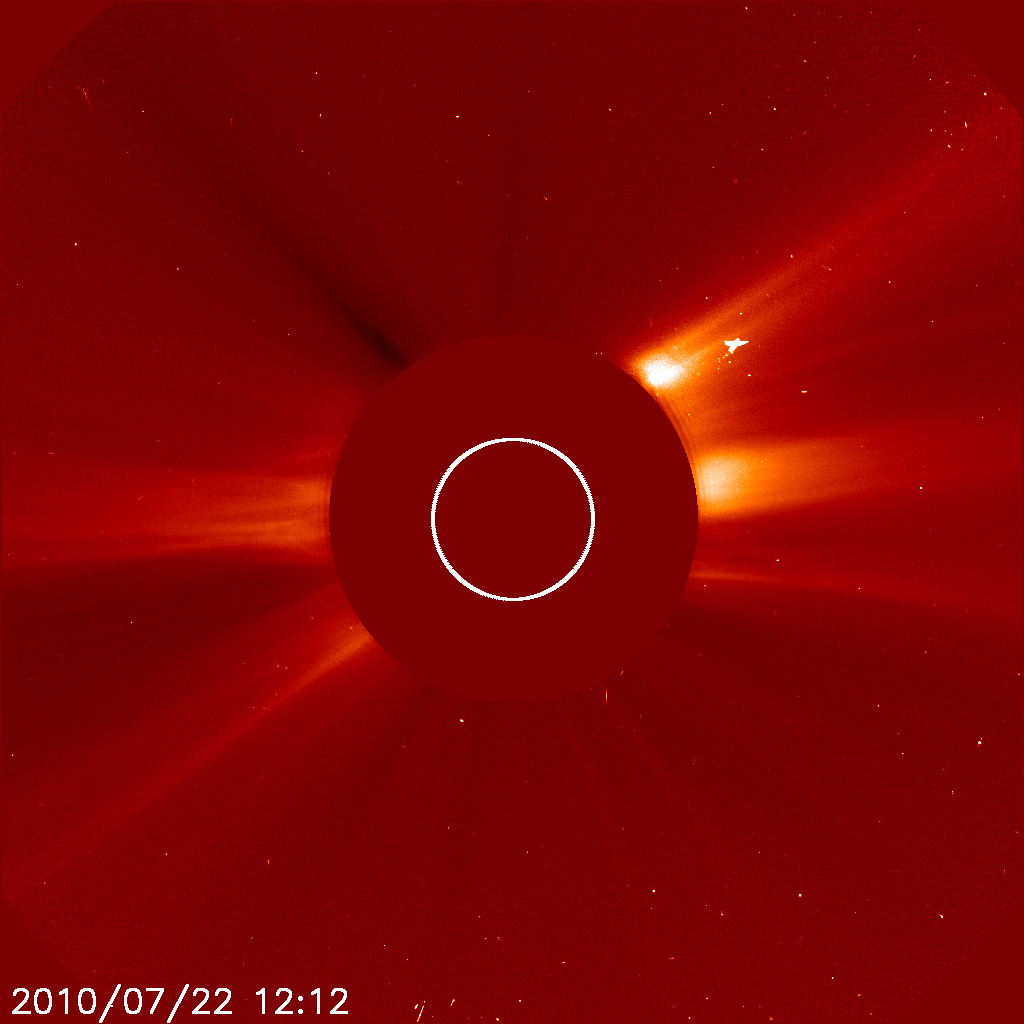
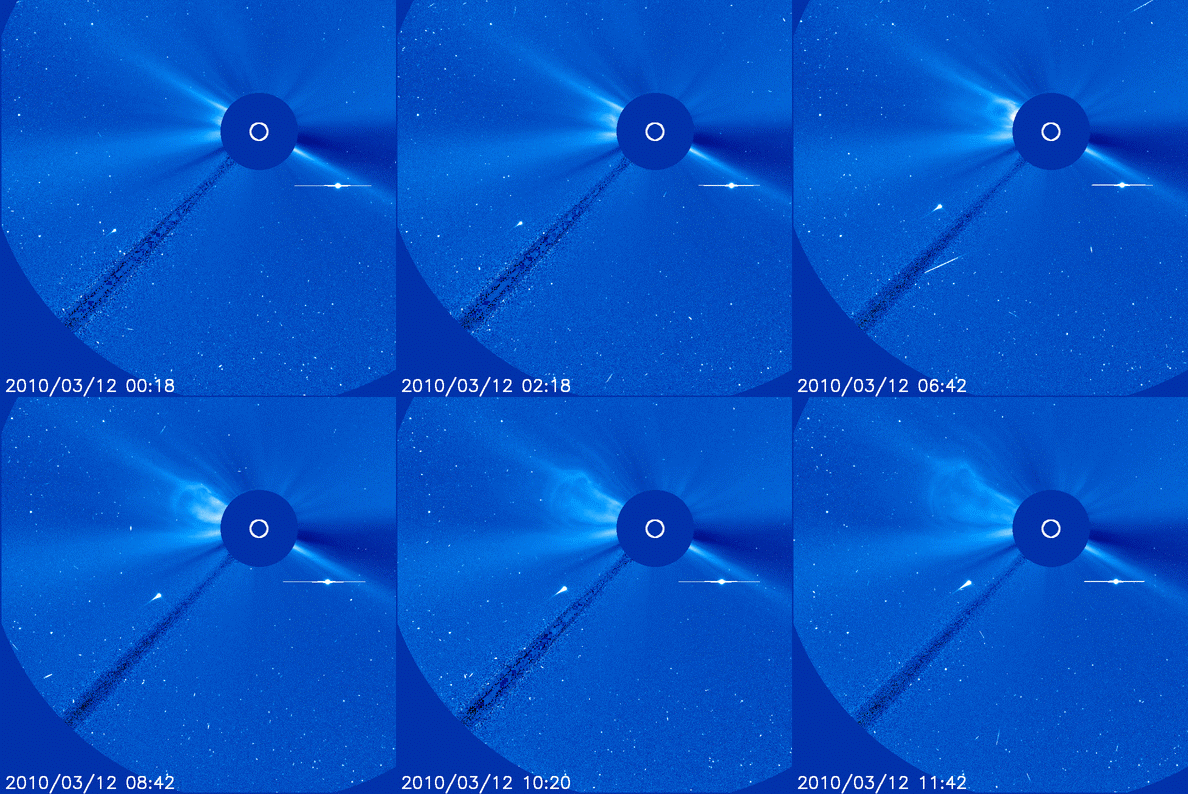
The astronomy photo of the day comes courtesy of NASA’s Solar and Heliospheric (SOHO) orbiting solar observatory. An enormous, fiery, winged shape can be seen as if emerging from the sun’s broiling surface to the upper right of the occlusion disk. For extra win, a trail of pixie dust follows it.
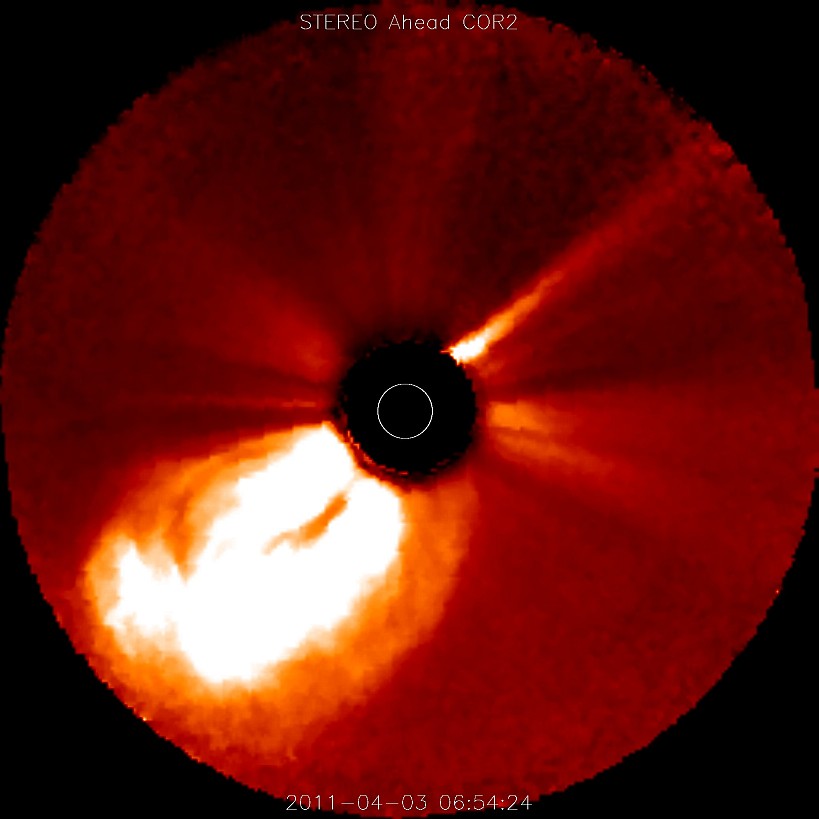
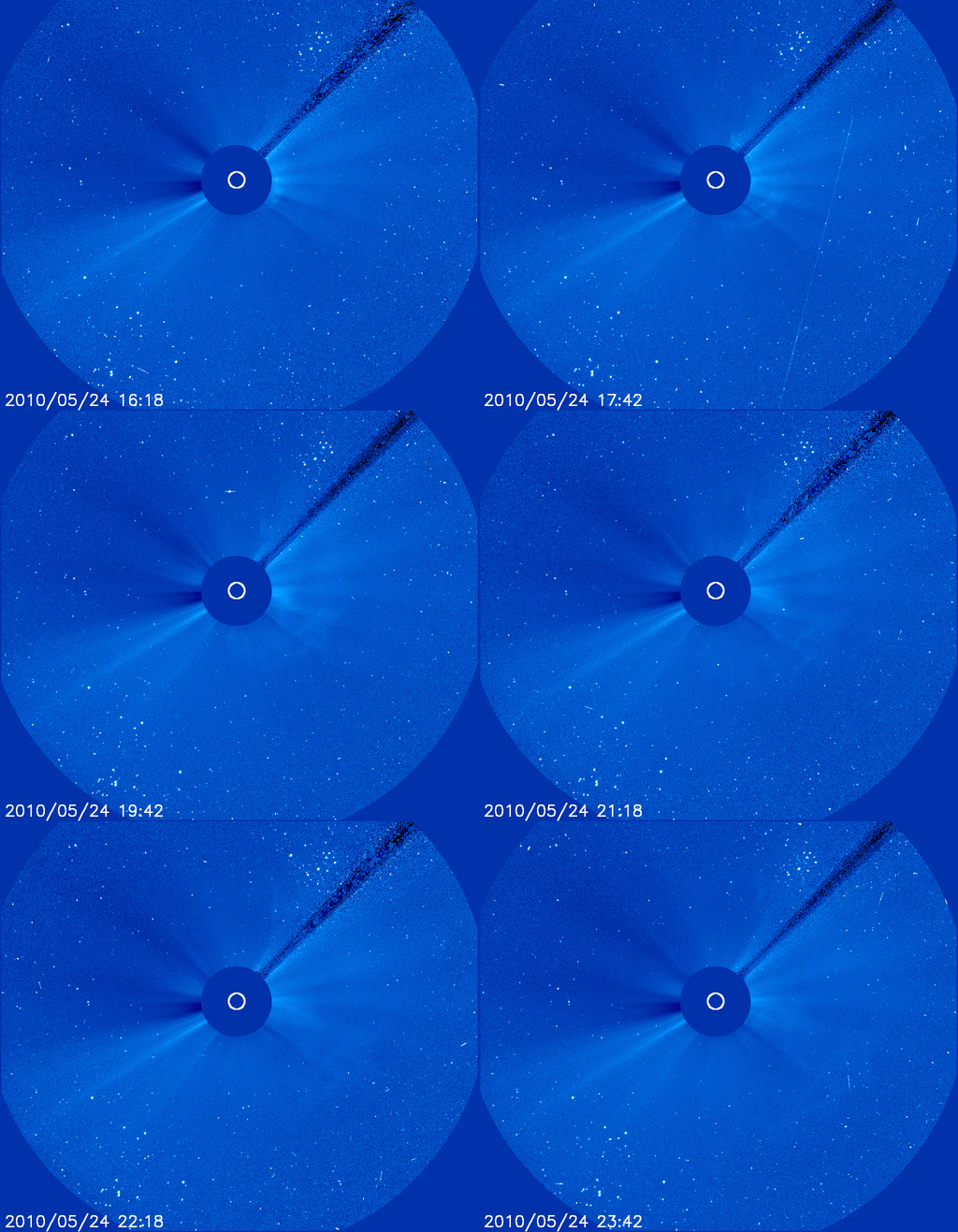
The sun produced a magnetic filament that burst Monday, shooting a “billion-ton” coronal mass ejection (CME) racing towards our planet, according to a post on spaceweather.com. NOAA projects a 35% chance of geomagnetic activity on May 27th when the CME is expected to hammer Earth’s magnetic field.
In the animated image below, the Solar and Heliospheric Observatory (SOHO) captured the CME speeding away from the sun. The Pleiades constellation, a star cluster with sinister occult meaning, can be seen drifting overhead.
It is unproven but probable that CMEs trigger earthquakes. The fluctuations of Earth’s magnetosphere and ionosphere resulting from the impact of a coronal mass ejection induce magnetic and electrostatic forces and even produce massive electrical currents on the surface of our planet. Doubtlessly, these forces are occasionally sufficient to catalyze fault zone slippage, causing earthquakes.
Earlier this year, we reported that the massive 8.8-magnitude earthquake in Chile was predicted several days before it occurred based upon a scheduled CME impact.
The University of Arizona welcomed LUCIFER, an astronomical system for observing near-infrared light. LUCIFER 1, the first of two cameras/spectrographs, was recently installed on Mount Graham’s Large Binocular Telescope (LBT) in southeastern Arizona.
After more than a decade of design, manufacturing and testing, the new instrument – dubbed LUCIFER 1 – provides a powerful tool to gain spectacular insights into the universe – from the Milky Way to extremely distant galaxies. LUCIFER, built by a consortium of German institutes, will be followed by an identical twin instrument that will be delivered to the telescope in early 2011.
The LUCIFER project recalls our recent research into the Georgia Guidestones which has revealed that the cult behind that controversial monument venerates Lucifer, the fallen angel that many, including the important theosophist Albert Pike, equate with Satan. Moreover, that powerful but deranged cult encoded unambiguous numerological information into the Georgia Guidestones that points to the Burj Khalifa, the tallest building in the world. Opened earlier this year, the Burj Khalifa obviously symbolizes a new Tower of Babel for this secretive group of “Luciferians.”
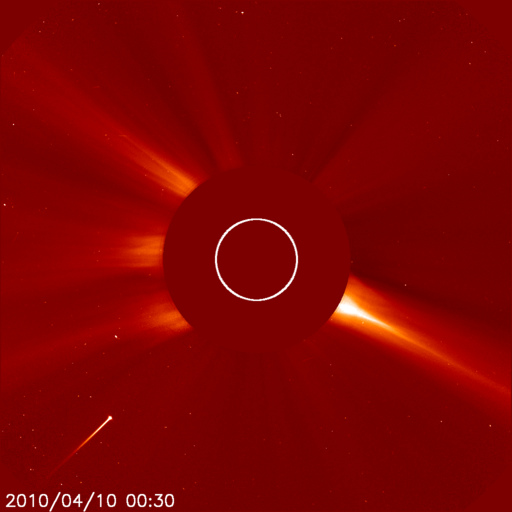
A bright comet appeared out of nowhere and smacked into the sun today. This makes the third such impact this year.

Another bright comet hit the sun today.
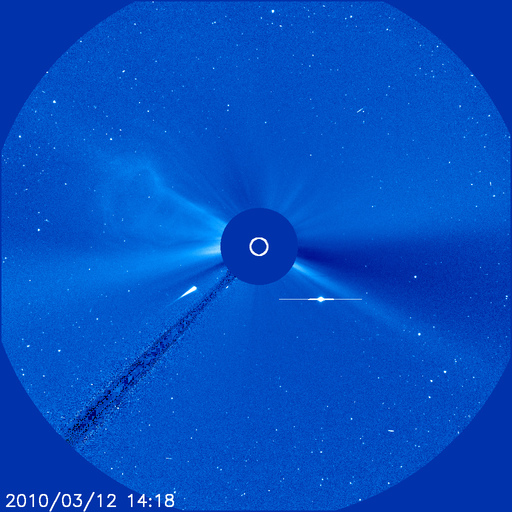
A comet-like body of significant brilliance apparently struck the sun yesterday. We alerted our readers to the impending impact several hours before it occurred.
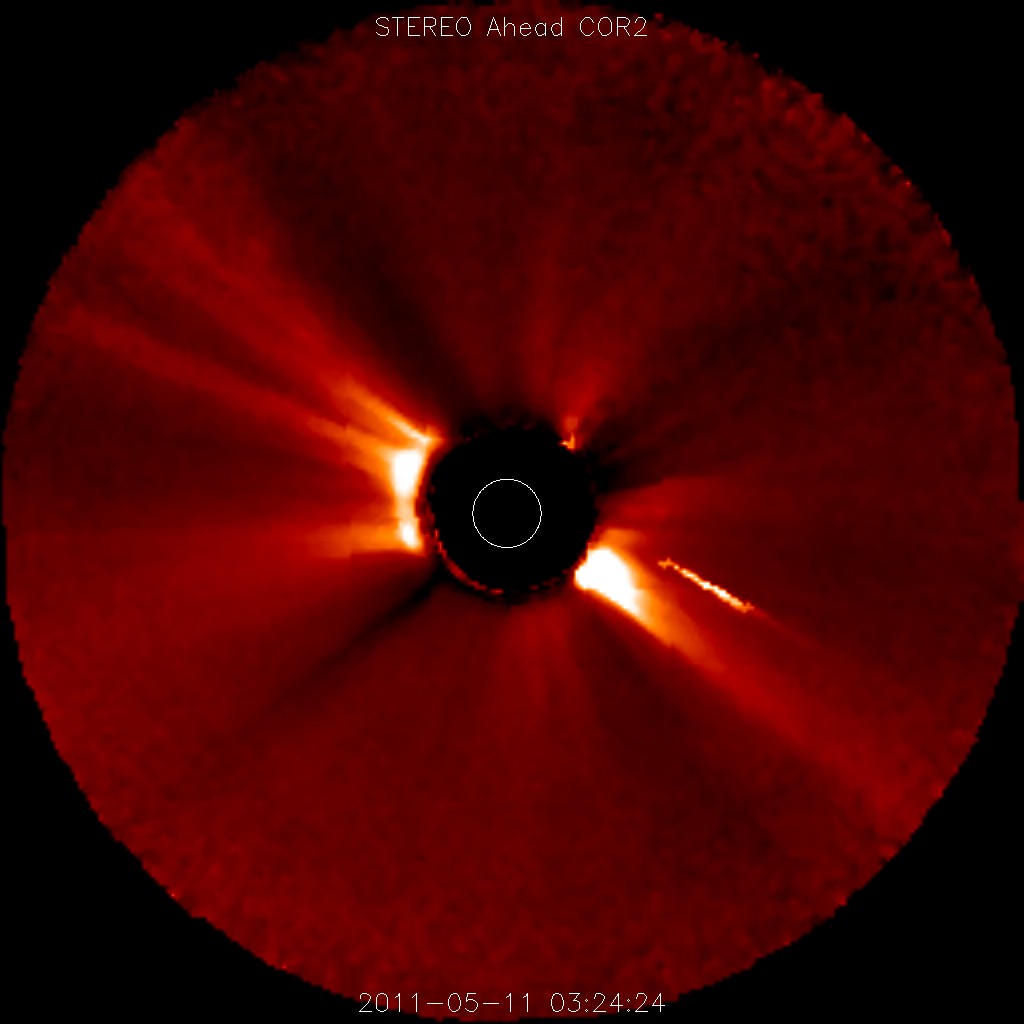
As the body, assumed to be a Kreutz sungrazer comet, plunged towards the sun, most observers switched to the STEREO Ahead COR1 and STEREO Ahead COR2 satellite imagers.
NASA’s STEREO consists of two virtually identical observatories orbiting the sun in different positions, one leading the earth in its orbit and one trailing our planet, to provide stereoscopic views of solar weather. NASA launched STEREO so that it can keep an eye on solar weather, particularly Coronal Mass Ejections (CMEs), which have known destructive potential for orbiting satellites and even earthbound electrical systems.
The COR1 imagers were desirable for watching the comet strike because they have relatively small occlusion disks allowing observation of the inbound body to within about 150,000 miles of the turbulent solar “surface” composed of hot plasma. Images are normally uploaded to NASA’s STEREO website at five minute intervals and can be stitched together to construct a movie of solar events.
For example, to see the last movie from STEREO Ahead COR1, visit http://stereo-ssc.nascom.nasa.gov/cgi-bin/images, select “Ahead COR1″, boost the resolution to 512×512, click “Slideshow” and then depress the “Search” button. Leaving the dates blank will pull up the latest images. Using the date range 20100310 – 20100313 will provide all recorded images for the two impacts that occurred yesterday.
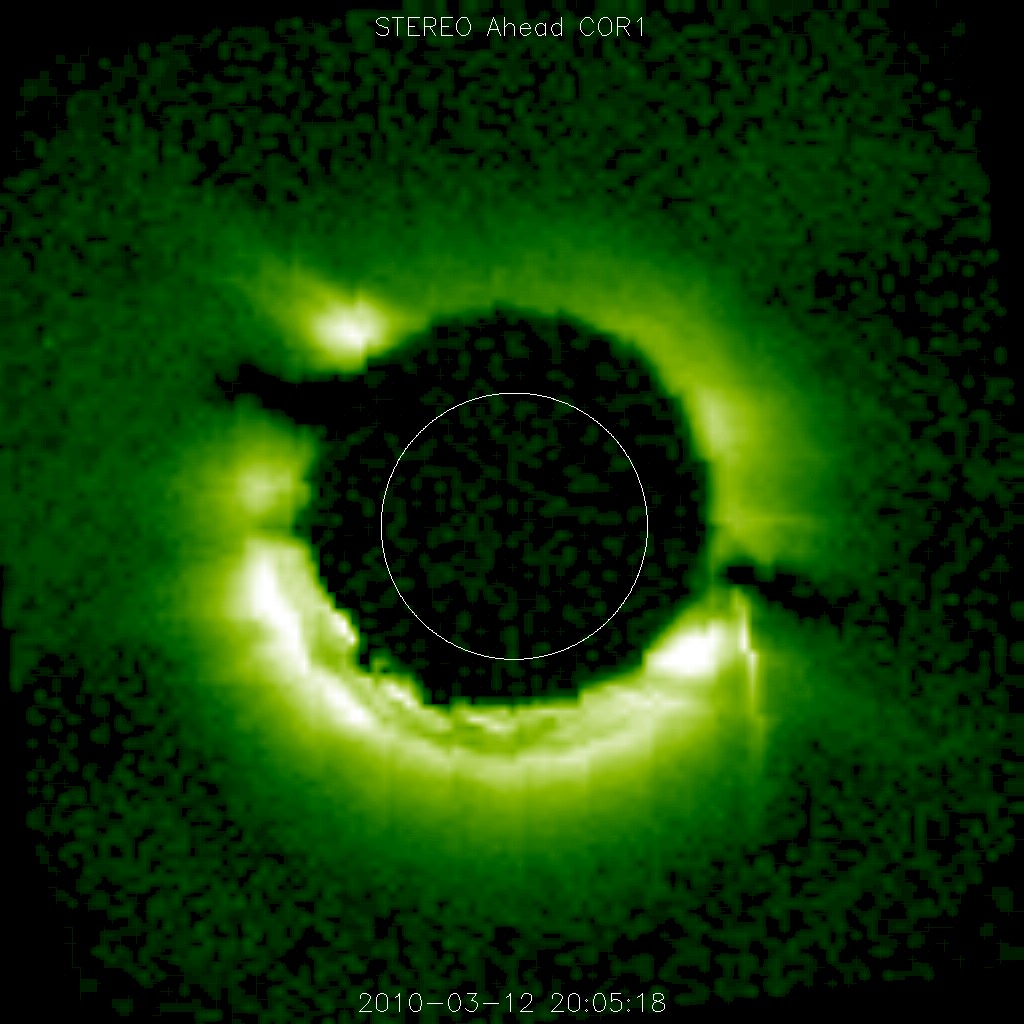
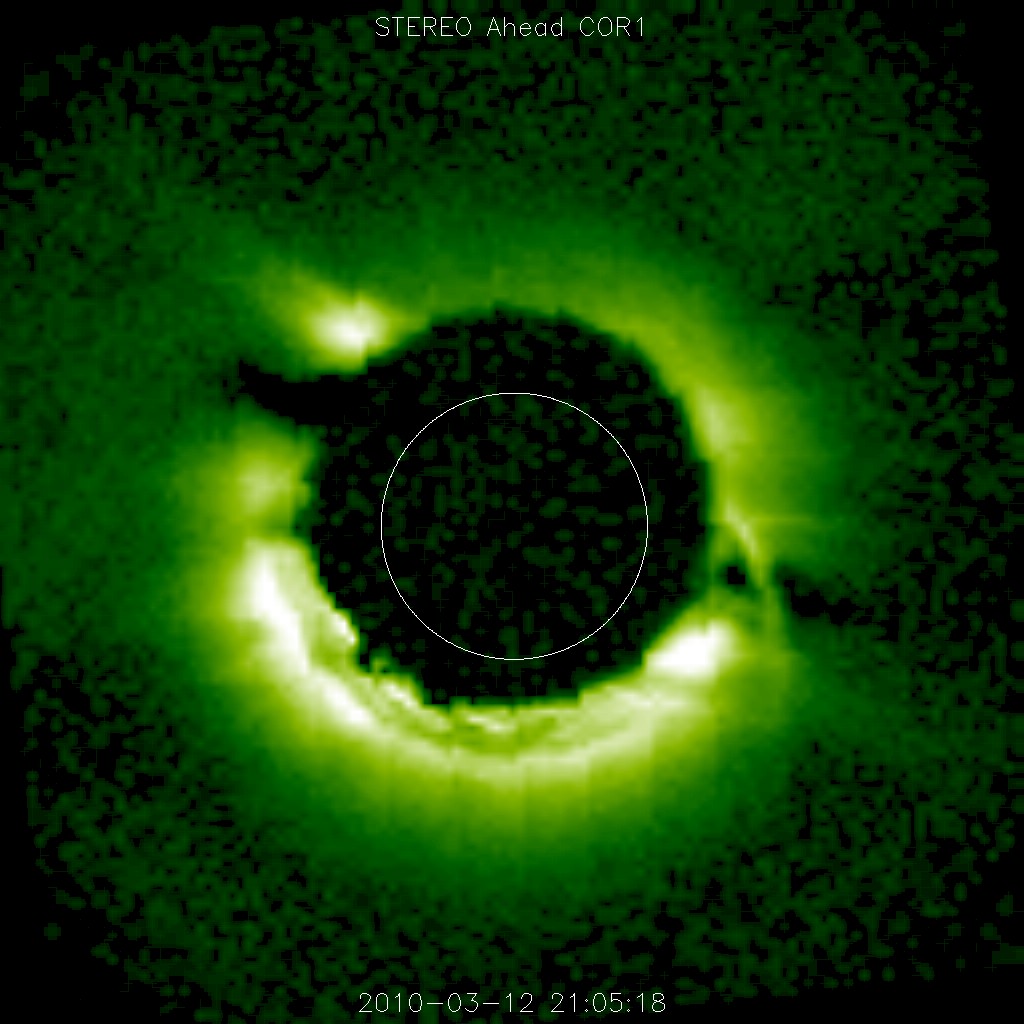
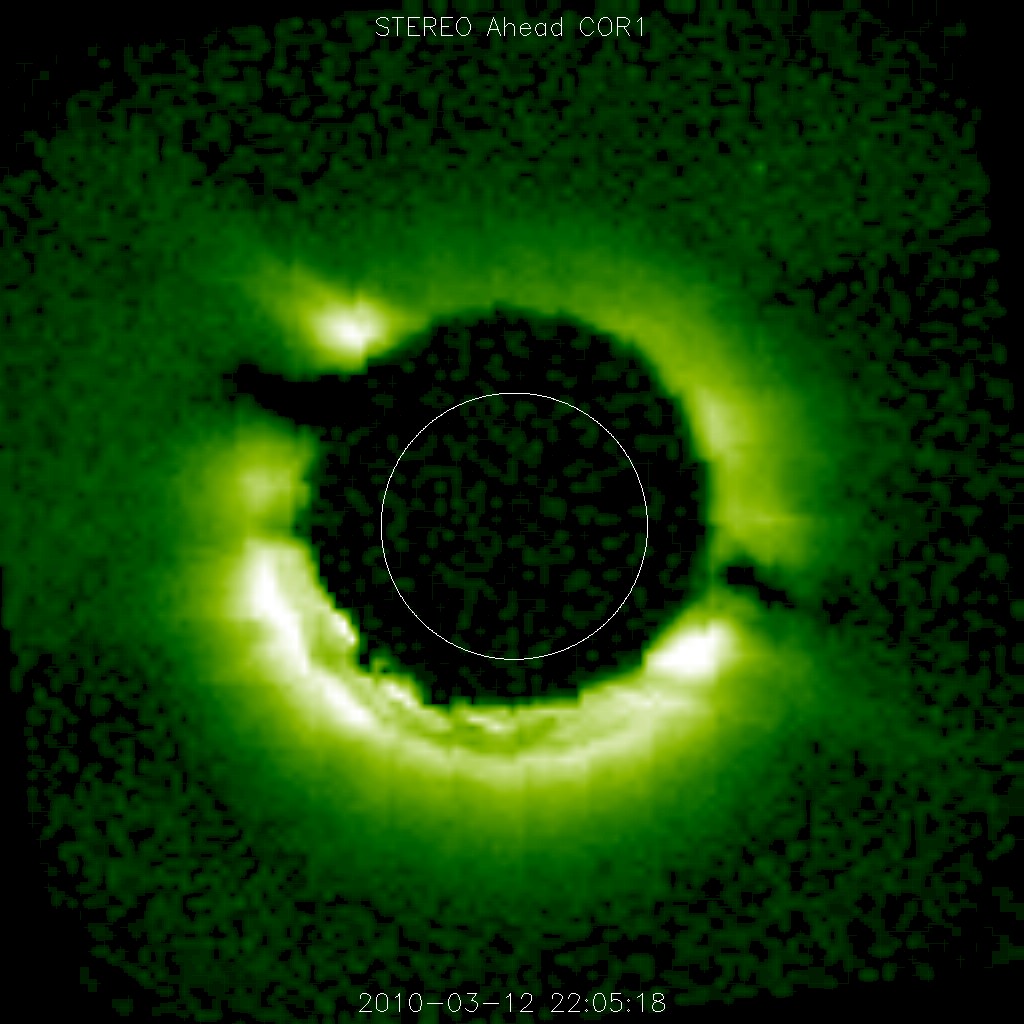
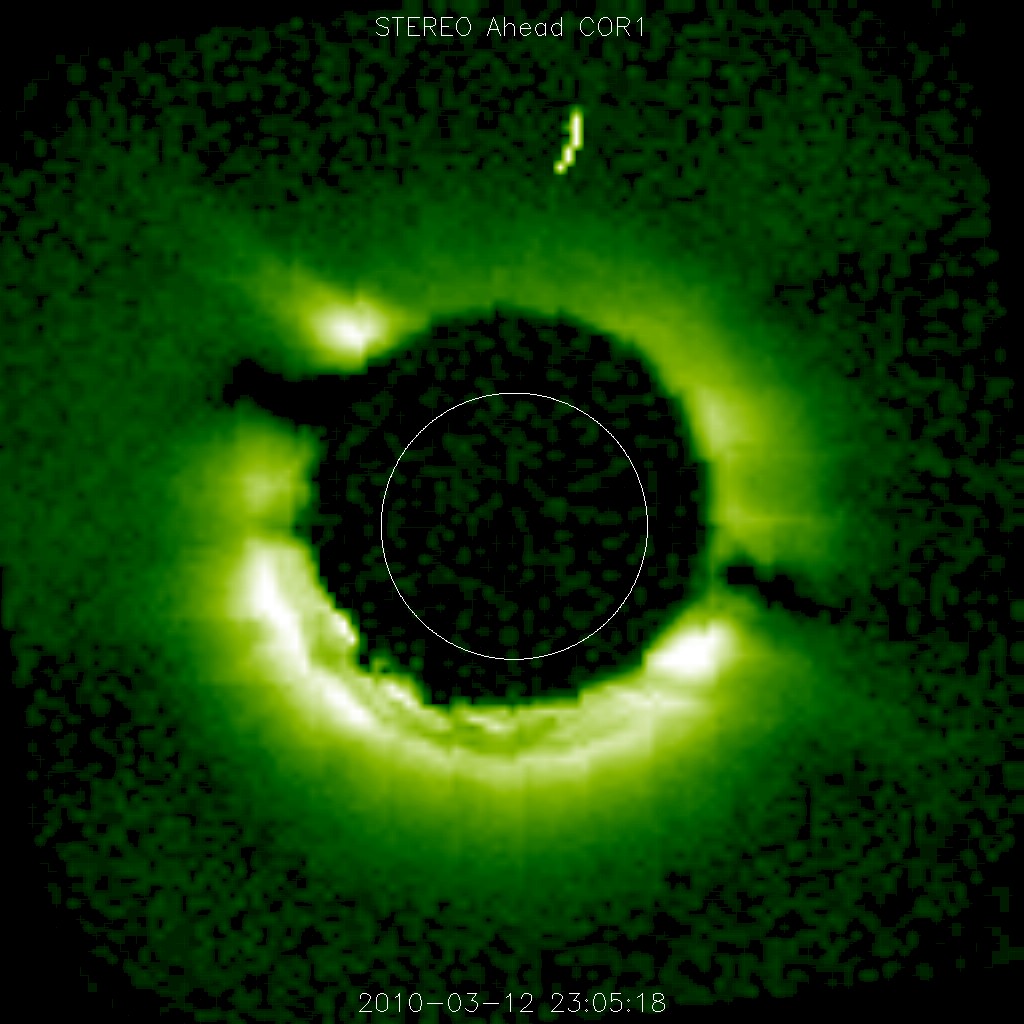
Indeed, as the doomed comet hurtled towards its fiery fate, Ahead COR1 provided several unmatched images until NASA stopped updating Ahead COR1 data immediately after impact where a bright streak can be seen leaving the sun at an odd angle. In fact, the update frequency of Ahead COR1 had already been throttled down from once every five minutes to once every hour with an eight hour gap preceding the appearance of the comet in the imager. The following sequence of photographs constitute those most temporally local to the comet impact event.

A strange, bright streak can be seen apparently emanating from the sun. This is the last hourly update.
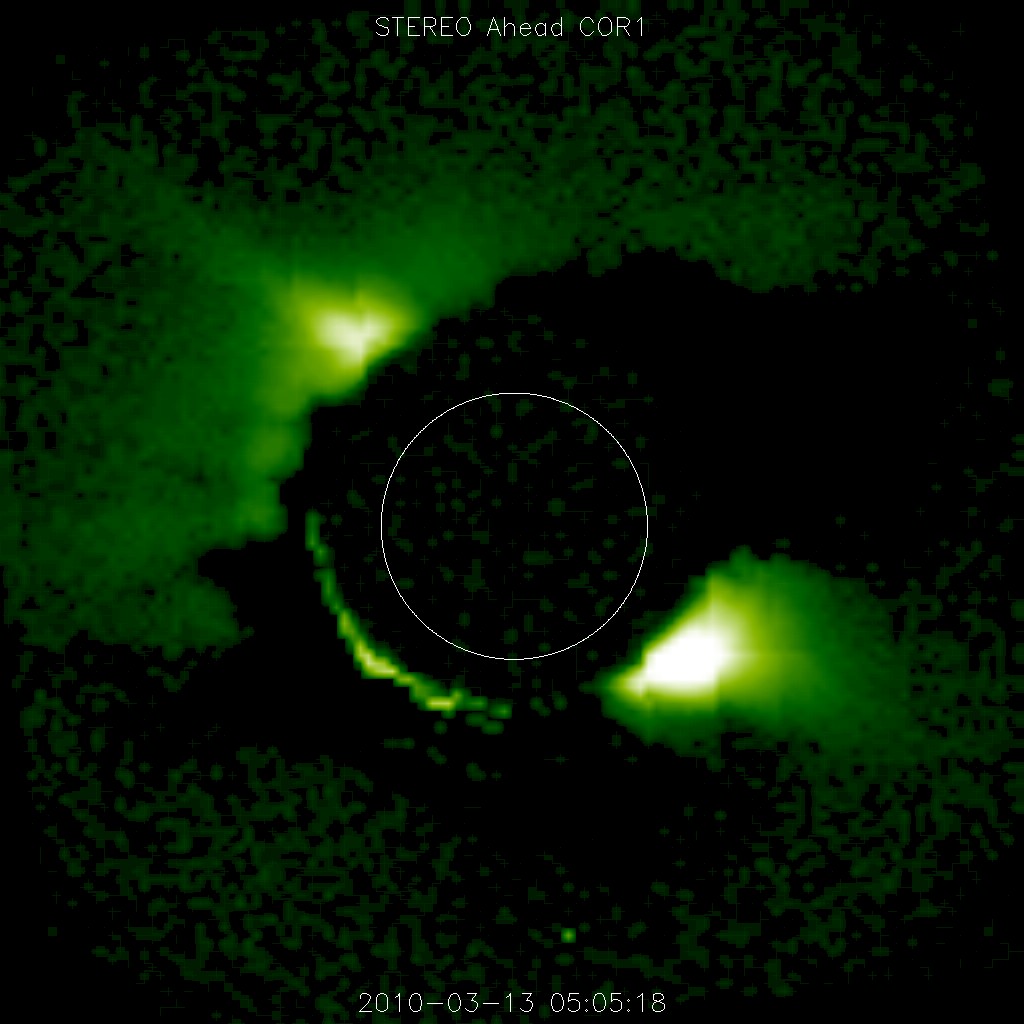
The next Ahead COR1 image after the "streak." Six hours have passed. Note how the image has darkened.
What is the cause of the lost data? Is it yet another demonstration of government incompetence? Or is this a continuing example of our government deciding to play our nanny, spoon-feeding us only the information they think we can handle?
In either case, NASA, if the data is available then make it available. And next time don’t drop the ball again.
UPDATE: A much smaller body appears to have preceded the currently observed impactor by about ten hours and may have triggered the coronal mass ejection seen in the original movie at the bottom of our article below. The first object is visible plunging towards the sun along the same trajectory as the current impacter in this much longer time scale movie viewable here.
A large object is now highly visible through various solar observing instruments and will likely crash into the sun within the next few hours. The body is currently assumed to be a Kruetz Sungrazer comet. The object first appeared on instruments only a few hours ago and is rapidly descending towards the sun.
The object’s dramatic increase in apparent size in the animation below is likely due to massive gas emissions caused by surface boiling and sublimation as the body, presumably an icy comet, nears the sun. The second large object in motion to the right of the sun is the planet Mercury. The solar impacter’s apparent size in earth-based images is already as large as Mercury’s, but this is probably an effect of the rapidly billowing gas envelop surrounding its cometary nucleus. The coma of large comets can swell to sizes larger than Jupiter and can even rival the sun’s diameter, although their masses remain comparatively infinitesimal.
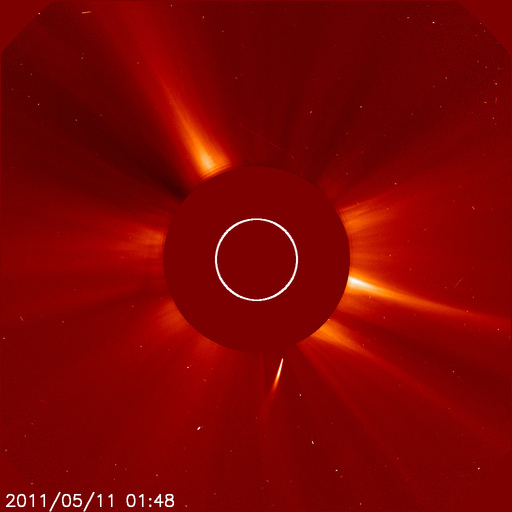
The large occlusion disc in the center of the image is used to block the sun’s blinding light. The dark line emanating to the lower left of the disk is the shadow of a rod used to hold the disc in place. The inner white circle on the occlusion disc marks an outline of the sun’s position and size.
A coronal mass ejection (CME) is occurring in the animation on the left side of the sun. A poster to a popular message board correctly predicted the 8.8 earthquake in Chile based upon the impending impact of a CME on the earth.
Considering its beeline trajectory, it is highly likely that the current object will strike the plasma “surface” of the sun, but it is possible that the body will circle either in front of or behind the sun.
The consequence of the impending impact is unknown, but considering the apparent mass and speed of the impactor, the body’s plunge into the sun will likely spawn flares, sunspots and perhaps multiple CMEs.


Recent Comments